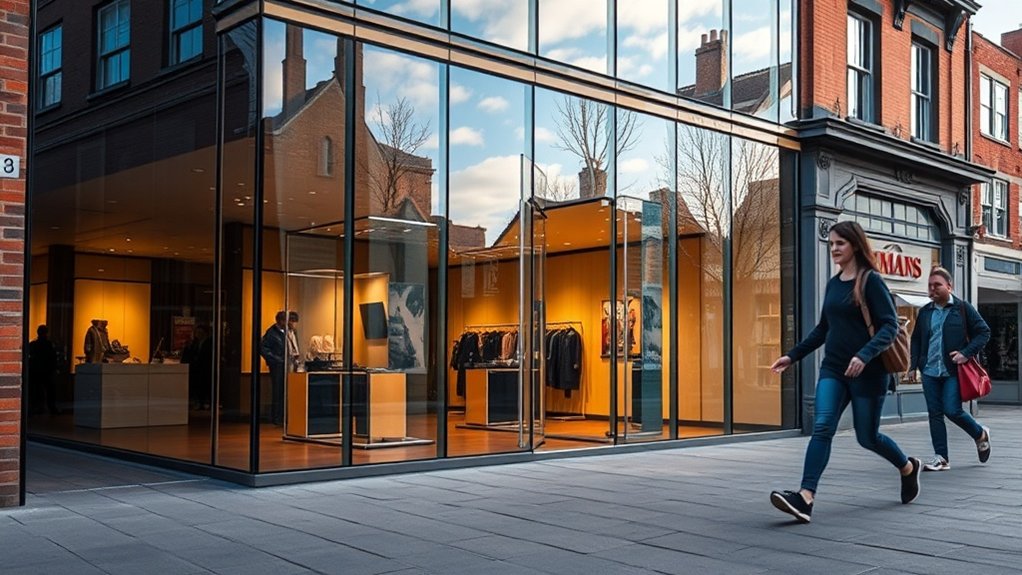
Shop front glazing in Days Lane is the glass that sells for you: a clear, well-lit frontage that shows off stock and branding to passing trade while meeting Building Regulations, planning rules and your insurer’s conditions. We design, supply and fit toughened or laminated safety glass in aluminium or steel frames, with secure doors and energy-efficient units that satisfy Part L, Part K and Part B. The sections below explain the choices and how to pick the right system and installer for your premises.
Key insights
- Shop front glazing in Days Lane covers the design, supply and installation of glass frontages for shops, cafés, restaurants and showrooms, fitted to suit the building and the brand.
- Toughened or laminated safety glass to BS EN 12600 is used throughout, with Part K governing critical locations and Part B covering fire and escape.
- Thermally broken aluminium or slimline steel frames give clean sightlines, carry heavy doors and take access control and multi-point locks.
- Low-E double glazing, warm-edge spacers and good seals cut heat loss and help a frontage meet Part L.
- Routine cleaning, hardware checks and seal inspections keep the frontage looking sharp and keep the insurer happy.
What Is Shop Front Glazing In Days Lane?
Shop front glazing means the complete glazed frontage of a commercial unit: the display windows, the entrance door, the stall riser and the frame that holds it all together. In Days Lane that covers everything from a corner newsagent to a restaurant with full-height folding glass. It is a piece of structural engineering as well as a shop window, because it has to carry wind load, resist impact and keep the weather out while staying as transparent as possible.
Many frontages in Days Lane sit in older buildings on established shopping streets, so the glazing has to respect the existing fascia, pilasters and any conservation area guidance while still looking current. We assess structural loads, sightlines, solar gain and security requirements, then check them against planning constraints. The mix of businesses and customers on a given street also shapes how transparent the frontage should be, how it is lit and where displays sit. The goal is simple: more of the people walking past should see in, come in and buy.
Shop Front Glazing Types For Days Lane Businesses
Specifying a shop front for a Days Lane business starts with the glass, which is almost always toughened or laminated to meet safety and security requirements. The frame and hardware then have to be matched to that glass, the footfall through the door, the exposure of the street and the weight of the panels. When glass, aluminium profiles, door gear and locks are chosen together, the frontage works as one system rather than a collection of parts.
Toughened and Laminated Glass
Both are classed as safety glass, but they do different jobs on a Days Lane shop front. Toughened glass is heat-treated so the surface is under compression, which makes it around four to five times stronger than ordinary float glass and causes it to break into small, blunt pieces. It gives clear, undistorted display windows and takes etched or printed branding well.
Laminated glass bonds two or more panes with a PVB or stiffer SGP interlayer. When it is struck it cracks but stays in the frame, so the shop remains closed to intruders and weather until the panel is replaced. Tinted or patterned interlayers give privacy for a salon or clinic without losing daylight, and anti-bandit grades are available where the stock is high value.
Framing and Hardware Options
The glass is only half the specification; the frame and hardware decide how the frontage behaves day to day on a Days Lane street. The main choices are thermally broken aluminium, slimline steel, or a hybrid with timber inside for warmth and metal outside for strength.
Door hardware takes the punishment, so specify commercial-grade hinges, continuous hinges on tall doors, and floor springs or pivots rated for high cycle counts and the wind loads on exposed corners.
Framing can carry the brand too: powder-coated profiles in a corporate colour, recessed LED channels or concealed tracks that make the glass appear to float. Whatever the look, check that locks, access control and closers fit the profile before ordering, so appearance and reliability are not traded against each other later.
Shop Front Glazing Costs, Lifespan And Upkeep
Budgeting for a shop front in Days Lane means weighing the installation cost against how long the frontage will last and what it will cost to look after. Frame specification, glass type, sealants and hardware all influence maintenance, repairs and the eventual replacement date, so a cheap frontage can cost more over ten years than a well-specified one. This section sets out how to assess the whole-life cost so the glazing stays sound, compliant and presentable.
Initial Installation Investment
The first step is a like-for-like comparison of standard toughened glass, laminated security glass and high-performance double or triple glazed units for your Days Lane premises. The better systems cost more per square metre, but their thermal performance, noise reduction and durability reduce running costs and the risk of disruptive repairs.
Three things set the price of a new frontage:
- Glass specification: U-values, g-values and safety classes that meet the regulations and the brand brief.
- Framing: thermally broken aluminium against cheaper, non-broken profiles that lose heat and attract condensation.
- Complexity: structural openings, load-bearing beams and the interface with signage, shutters or automatic doors.
Getting these right at the start means you spend once, deliberately.
Maintenance, Repairs And Longevity
Over the life of a Days Lane shop front, how it is looked after affects total cost as much as the original specification. Set a cleaning routine using pH-neutral cleaners and soft tools so coatings and low-E surfaces are not scratched or dulled.
Hardware should be chosen for weather resistance, because rain, winter frost and traffic grime wear out cheap hinges and closers quickly. Inspect seals, drainage slots and silicone joints at fixed intervals to catch water ingress before it corrodes the frame. A simple log of inspections, impacts and minor repairs makes it easier to plan replacements instead of reacting to failures.
When a pane does break, replace it with a thermally matched unit of the same specification and have it re-glazed by a glazier, because a mismatched or badly seated pane picks up stresses that shorten its life.
Security Vs Style In Shop Front Glazing
On the busier streets of Days Lane, a shop front has to look inviting and resist a determined attack, and the two aims are compatible if they are designed together. Modern systems let you specify high security without shrinking the glass or hiding the brand behind bars and shutters.
The three areas to get right are:
- Glass: laminated toughened panes, anti-bandit interlayers or anti-shatter film that stop forced entry while keeping large, clear display areas.
- Framing and hardware: reinforced thermally broken aluminium, multi-point locking and security-rated thresholds that still suit the look of the façade.
- Visibility: open sightlines so passers-by and police can see in, discreet frame-mounted sensors, and lighting that shows the stock while signalling that the shop is protected.
Energy-Efficient Shop Front Glazing In Days Lane
With energy prices where they are, the glazing on a Days Lane shop front is a significant running cost if it is single glazed or poorly sealed. The frontage is the thermal boundary between the street and the sales floor. Low-E double or triple glazing with warm-edge spacers and argon fill reduces heat loss in winter and solar gain in summer, which keeps temperatures steady and takes load off heating and cooling plant.
Efficient glass helps the display as well. A solar-control coating keeps the window clear and glare-free and stops hot spots that fade stock and drive customers away from the window. Thermally broken aluminium frames, insulated panels where appropriate and a light selective tint give you the U-values you need without sacrificing daylight, so the shop is comfortable to browse in and cheaper to run.
Days Lane Shop Front Legal And Safety Rules
A shop front is a structural element and a public-facing safety barrier, so projects in Days Lane must satisfy Building Regulations, British Standards, local planning policy and the insurer’s conditions all at once. The brand brief has to work within those limits rather than around them.
The essentials for a compliant frontage are:
- Safety glass to BS 6262 and BS EN 12600, in the critical locations defined by Approved Document K, which includes all glazing in and beside doors and below 800 mm.
- Manifestation bands on large clear panes, level or ramped thresholds for accessibility, and stall risers or bollards where pedestrian safety or vehicle impact is a concern.
- Escape doors, fire-rated glass where zoning demands it and hardware that meets Approved Document B, with test evidence kept for building control and the insurer.
Choosing A Shop Front Glazing Company In Days Lane
With the design and compliance brief settled, the decision that matters most is who installs it. The right contractor delivers a structurally sound, compliant frontage on time and without the shop being shut for longer than planned. Firms that have worked in Days Lane understand the local planning officers’ expectations, especially in conservation areas and on listed parades.
Check the technical evidence: project-specific structural calculations, glass data (U-values, g-values, acoustic ratings) and documented compliance with BS 6262, BS EN 1279 for sealed units and Secured by Design where it applies. A local firm with its own fabrication, an emergency boarding and call-out service and traceable sources for hardware and laminated glass is far easier to deal with when something goes wrong.
It also helps if they can survey accurately and produce drawings your shopfitter and signage company can work from, so the frontage, fascia and interior fit together first time.
Design Tips For Stand-Out Days Lane Shop Fronts
Once the contractor is appointed, the design can focus on making the frontage work for the brand and the building. Start with the glass: low-iron glass shows colours accurately, and fritted or back-painted panels carry your palette onto the façade without blocking the view into the shop.
On the busy streets of Days Lane, think of the glazed elevation as something that changes and draws people in, not a fixed pane.
- Balance openness and privacy with light tints and well-placed manifestation bands.
- Build in LED framing, screens behind the glass or switchable panels for seasonal campaigns.
- Use slim thermally broken frames for clean sightlines, airtightness and Part L compliance, so the eye lands on the product, not the frame.
Find out more about our Days Lane glaziers and the other work we do locally.
Frequently Asked Questions
How Does Shop Front Glazing Affect Business Insurance Premiums in Days Lane?
Insurers price a Days Lane shop on the likelihood of break-ins and glass claims, and the frontage is a big part of that assessment. Certified laminated or anti-bandit glass, security film, multi-point locks and shutters or bollards where appropriate all reduce the perceived risk. Supply the insurer with the glass specification, the BS EN 356 or PAS 24 test evidence and photographs, and ask them to review the premium and the glass excess. Many will improve terms or widen cover for vandalism and forced entry once the frontage is upgraded, so it is worth raising at renewal.
Can Glazing Be Integrated With Digital Signage or Interactive Displays?
Yes. Screens can be mounted behind the glass or bonded to it, and the glass itself can be specified to suit. We use toughened or laminated panes with an anti-glare coating so the display reads in daylight, allow cable routes through the frame or stall riser, and make sure there is ventilation behind the screen so it does not overheat in a south-facing window. Touch interaction works through glass using projected capacitive film or infrared frames. Switchable privacy glass can also act as a projection surface after hours, which turns the whole window into a changeable advertising space.
What Are Typical Installation Timeframes for Replacing an Old Days Lane Shop Front?
Allow two to five working days on site for a full replacement, from stripping out the old frontage to final sealing and handover. Before that, a survey, structural checks and fabrication take two to six weeks depending on the system and finish. We plan the work around trading hours where possible, often fitting the main frames overnight or on closed days and temporary boarding the opening so the shop stays secure. Laminated security glass, bespoke steel profiles or unusual colours add fabrication time rather than site time, so the shop is rarely disrupted for more than a working week.
How Does Glazing Performance Differ on Busy Roads Versus Quieter Side Streets?
The street dictates the specification. On a main road through Days Lane the frontage takes constant vibration, diesel particulates and traffic noise, so laminated acoustic glass, thermally broken frames and robust seals earn their keep by cutting noise and resisting grime. On quieter side streets you can use lighter units that favour clarity and useful solar gain, and spend the saving on branding or lighting instead. In both cases we match pane thickness, interlayers and sealing to the exposure of the site, so the shop is as comfortable inside as the location allows.
Are There Sustainable or Recycled Glazing Options Suitable for Days Lane Shops?
There are. Float glass contains a proportion of recycled cullet as standard, and aluminium frames are typically made with high recycled content and are fully recyclable at end of life. Warm-edge spacers and low-E coatings reduce the energy the shop uses over its lifetime, which is the bigger carbon saving. Choosing durable laminated glass and mechanically fixed systems rather than fully bonded ones makes panels easier to remove and recycle when the frontage is next refitted. Ask for environmental product declarations if you need figures for a sustainability policy or a landlord’s reporting.
Summary
A well-specified shop front in Days Lane is both the shop’s best advertisement and its first line of defence. Getting the glass type, U-values, impact resistance and compliance right at the outset means fewer claims, lower bills and a frontage that still looks good in ten years. If your existing frontage is tired, insecure or costing you heat, call us for a free survey and a written quotation.